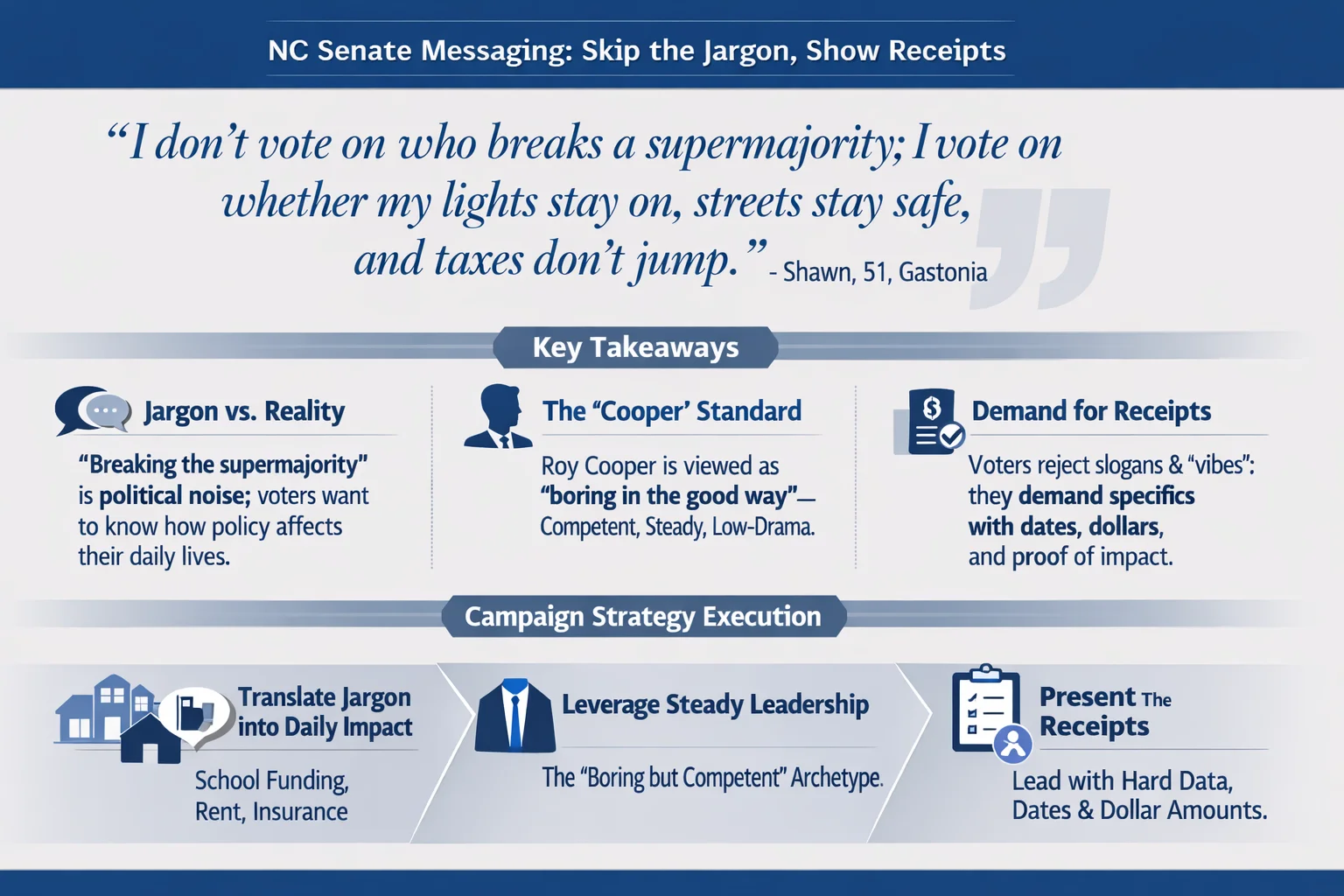
When Democrats talk about "breaking the supermajority" in North Carolina, voters hear political jargon. That's the headline from our January 2026 study of six NC voters across Greensboro, Charlotte, Cary, Gastonia, and rural areas.
Shawn, a 51-year-old electrical engineer from Gastonia, put it bluntly: "I don't vote on who breaks a supermajority; I vote on whether my lights stay on, streets stay safe, and taxes don't jump."
The Participants
Our panel included six North Carolina voters: Shavonna Pavone (32, Greensboro), Shawn Clavijo (51, Gastonia), Raymundo Fabian (47, Rural NC), Cheryl Shields (54, Greensboro), Terry Gerber (55, Cary), and Carlester Holmes (43, Charlotte).
Roy Cooper as Senate Candidate
The consensus on Cooper: "boring in the good way." Voters see him as competent, steady, and low-drama.
Breaking the Supermajority
The response was unanimous: it sounds like political jargon. Shavonna: "If you want me to care, tell me exactly what changes at my kid's school, my insurance, my rent."
What Voters Want
The through-line: specifics with dates and dollars. Shavonna said, "Don't show up with vibes and a slogan. Show up with receipts."