
So here's the thing. I've been running consumer research studies for a while now, testing everything from oat milk brands to voter sentiment in swing states. But when a film production team came to me with a concept for a Summer 2026 creature feature called FISH DOG, I thought... this is going to be fun.
The premise? A genetic hybrid, half deep-sea predator fish, half weaponized military dog, escapes from a classified biotech lab and tears through rain-soaked city streets while a rogue scientist, a corporate black ops fixer, and an NYPD detective all race to find it first. The tagline: "Man's best friend just evolved."
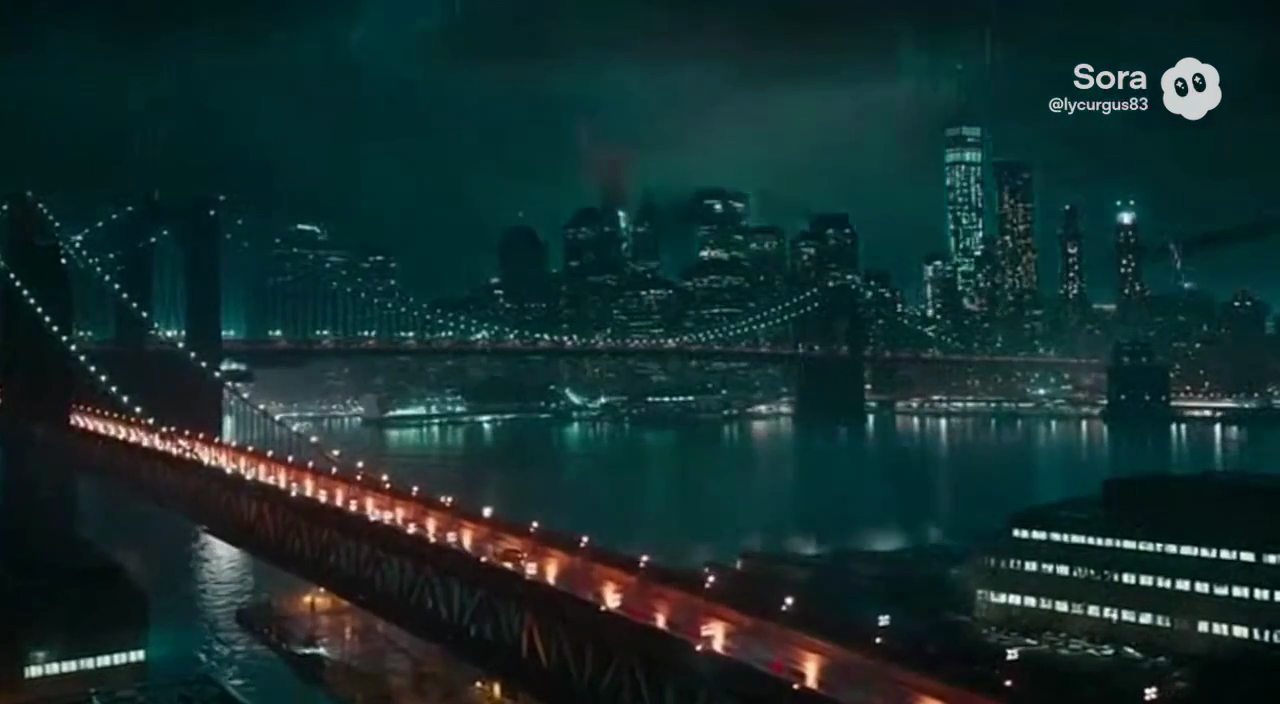
I genuinely wanted to know: does this land? Is it exciting? Is it too weird? Would real people actually buy a ticket? You can check out the official Fish Dog site and trailer to see for yourself.
So I did what I always do. I recruited 20 Americans, built a 7-question study with image attachments, and asked them to be brutally honest. They did not hold back.
The Panel: 20 Americans, No Filter
I used FishDog's synthetic research platform to recruit 20 personas broadly representative of the US adult population. Ages ranged from 17 to 80. We had retirees in rural New Hampshire, a risk analyst in Fort Worth, a nurse practitioner in Colorado, a high school student in California, a nonprofit programme manager in North Carolina, hospitality workers, engineers, teachers, and more.
No demographic skew. No self-selecting film buffs. Just regular Americans reacting to a movie pitch they'd never heard of before.
The study ran 7 questions, three of which included image attachments: a close-up of the Fish Dog creature design, the title card and poster art, and a quiet sunset pier scene showing the emotional bond between Fish Dog and the scientist who freed it.
You can view the full study with all 140 responses here.
Gut Reaction: "Turned Off, With a Flicker of Curiosity"
Let me be real: Q1 was rough for Fish Dog.
The majority of participants had a negative initial reaction to the concept. The phrase "turned off" appeared again and again. But here's where it gets interesting: almost everyone who said "no" also admitted to a small spark of curiosity. Something about the absurdity of it was almost compelling enough.
Tyrell, a 35-year-old risk analyst from Fort Worth, summed it up perfectly: "Gut reaction: mostly turned off with a tiny flicker of curiosity. The title FISH DOG sounds like a meme, and the three-hunters plot feels like studio-notes soup instead of a clean hook."
Margaret, 79, from Houston: "R-rated creature stuff with a fish head on a dog just sounds mean and ugly, and I don't care to watch God's creatures mixed up like that for shocks."
The R-rating was a recurring barrier. Jaziel (17, California) said: "R-rated is already a no for me. Church rules, mamá rules." The tagline "Man's best friend just evolved" drew eye-rolls across the board.
Key finding: the concept generates curiosity through sheer absurdity, but the execution signals push people away before the curiosity can take hold.
The Creature Design: "Goofy, Not Scary"
Here's where it gets really interesting though.
When I showed participants the actual Fish Dog creature, the near-universal reaction was: it looks goofy. Not terrifying. Not awe-inspiring. Goofy.
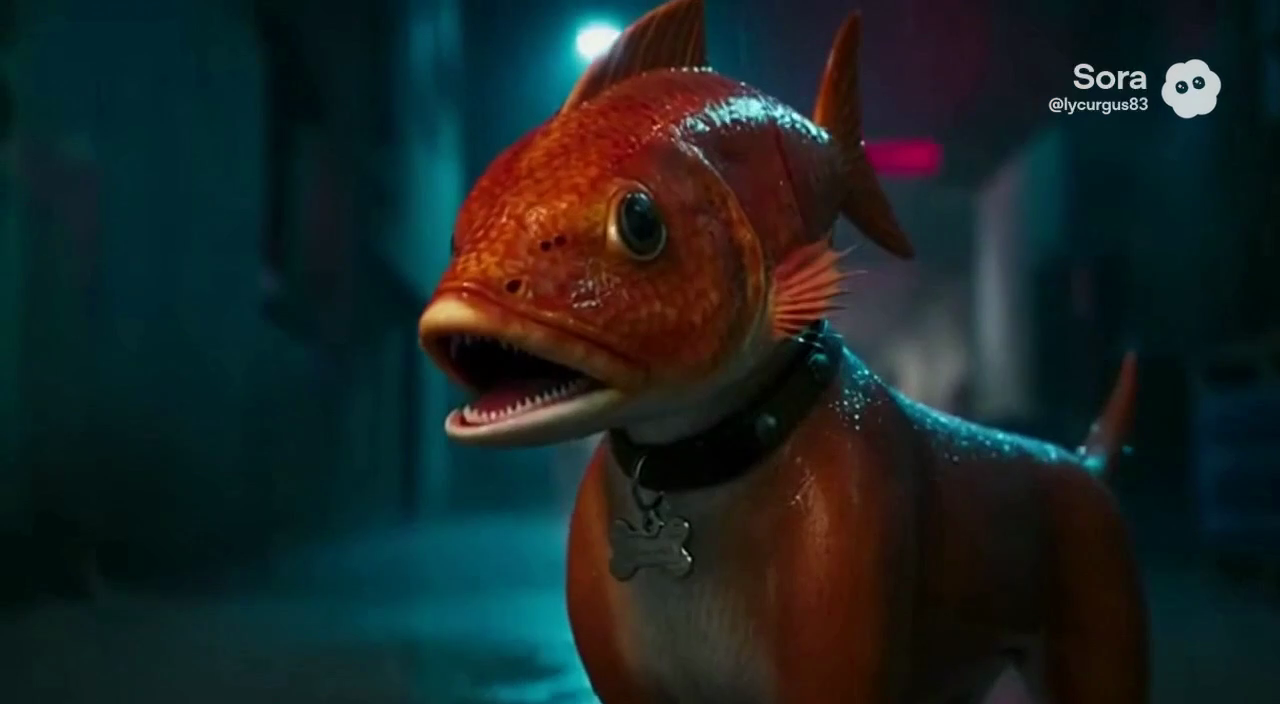
Drew, a 35-year-old nurse practitioner from Colorado: "The fish head on a dog body comes off as pretty goofy. If the movie embraces this absurdity with some humor, it could be a fun watch. Otherwise, it belongs in a niche, late-night lineup."
Tammy, 47, from Missouri, captured the core tension: "Those fish eyes on a dog body, a bit cartoonish. It can't decide if it wants to terrify or make you laugh. Not sure it's pulling either off."
Jaziel, our 17-year-old from California, didn't mince words: "It just looks goofy, like someone threw a fish head on a dog's body and said, 'Let's make it an experiment.' Feels more like a meme than anything serious or scary."
This is critical feedback for the filmmakers. The creature is the film's central asset, and it's reading as comedy, not threat. That's not necessarily fatal, but it means the marketing and tone need to lean into the absurdity rather than fighting it.
Genre Positioning: Creature Feature Meets Midnight Movie
The genre comparisons were remarkably consistent:
Splice, The Fly, Species (lab-gone-wrong body horror)
Deep Blue Sea (weaponised animal mayhem)
Sharknado (campy creature absurdity)
Blade Runner (rain-soaked neo-noir aesthetic, aspirational)
Venom, Resident Evil (corporate conspiracy + creature)
The Shape of Water (creature-human bond, but with teeth)
Drew nailed the positioning: "Feels like a schlocky creature-noir, a mid-budget sci-fi horror thriller dressed in rain and neon."
Not a single participant positioned Fish Dog as a mainstream summer blockbuster. The ideal audience: horror-action fans who enjoy campy creature features, midnight-movie energy, and group-watch people who want to laugh-cringe with friends.
The Poster Art: B-Movie Energy
When I showed the title card with its metallic typography and fire effects, the reading was almost unanimous: B-movie creature feature.
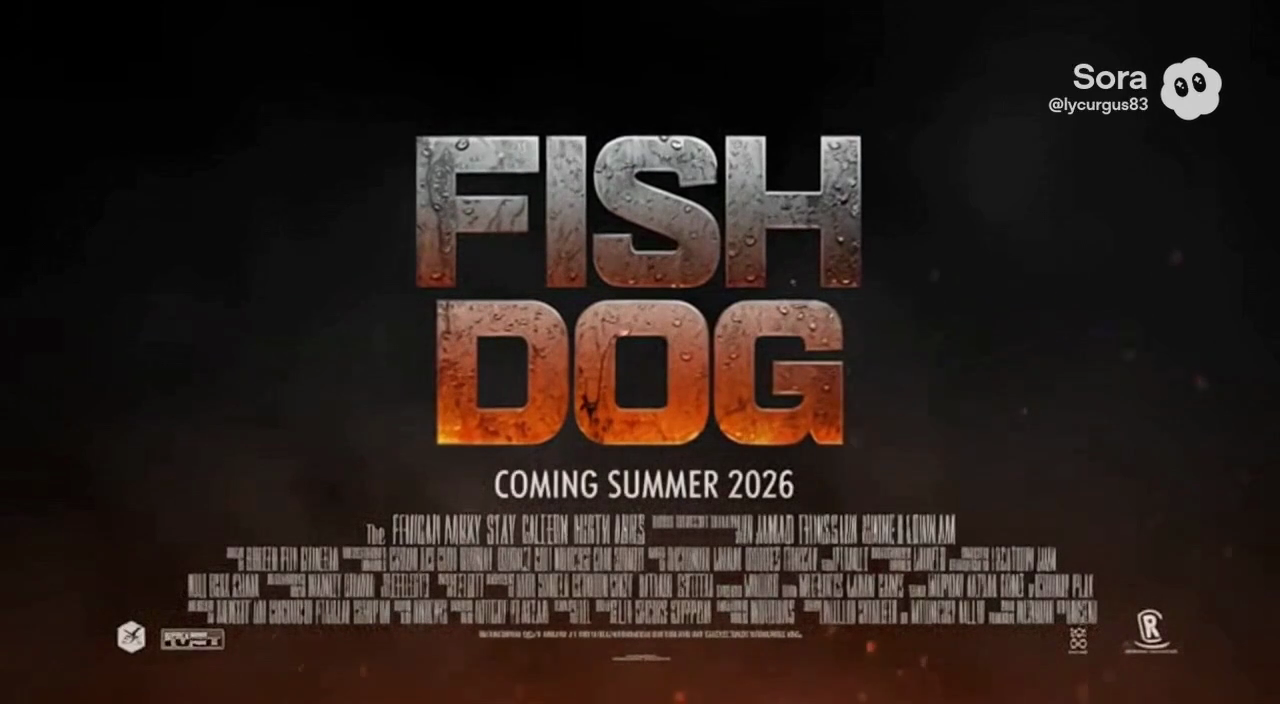
Larry, 59, from New Mexico: "This poster screams B-movie creature feature to me. The typography with the metal and ember effects gives it a kinda retro, overblown vibe that doesn't exactly say 'big summer blockbuster.'"
Jaziel was direct: "The fire and ember effects make it seem like it's trying really hard to look epic, but it feels more like a parody."
The poster is being read as "trying too hard." The visual language says summer blockbuster, but the content says midnight cable. That mismatch is hurting credibility.
The Sunset Pier: Where Fish Dog Actually Works
And then Q5 happened.
I showed participants the sunset pier image, a silhouette of the scientist sitting with Fish Dog at golden hour, and asked about the emotional bond angle. The response shift was immediate.
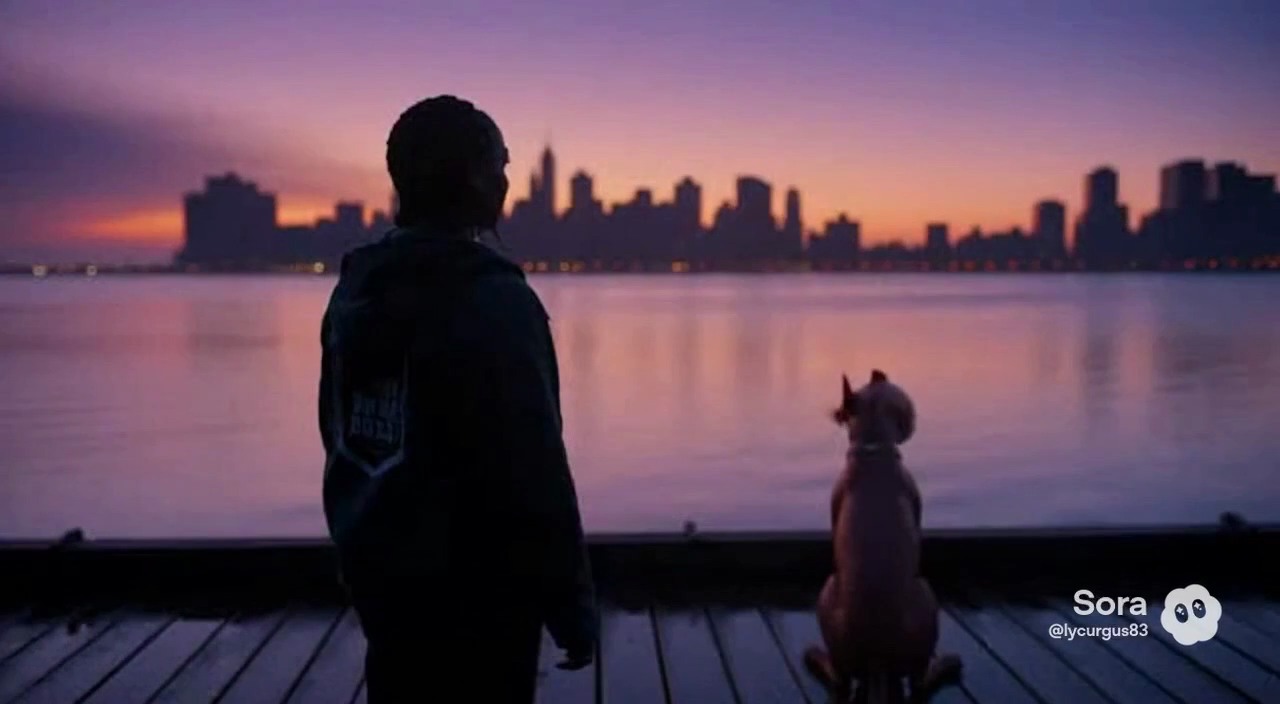
Kylie, 27, from North Carolina: "This image has a surprisingly tender feel to it, which is not what I'd expect from a movie called FISH DOG. That silhouette against the sunset gives it an introspective vibe, almost like there's more beneath the surface."
James, 79, who'd been dismissive throughout, softened: "That image has a bit of quiet charm, doesn't it? The 'loyalty has no species' angle tries to tug at the heartstrings, which is a nice touch if done right."
Drew, who'd called the film "schlocky," admitted: "That image is admittedly a bit more engaging. The silhouette at sunset adds a quiet, reflective tone, which could lend some depth to an otherwise outlandish premise."
This is the study's most important finding: the emotional bond between creature and human is Fish Dog's strongest asset. Participants who were completely dismissive responded positively the moment the film showed its heart. The "loyalty has no species" theme resonated far more than any action sequence or creature design.
Purchase Intent: Streaming, Not Theaters
Q6 was the money question. Would you see Fish Dog in theaters?
The answer: overwhelmingly no.
Skip entirely: ~30% of participants
Wait for streaming: ~55% of participants
Maybe a cheap Tuesday matinee: ~15% of participants
Opening weekend in theaters: 0%
Zero participants said they'd see Fish Dog in IMAX or on opening weekend. Tammy: "Standard-price tickets plus popcorn for something I'm side-eyeing already? I'd rather save that for a decent dinner."
The R-rating was cited as a barrier by nearly every participant. Multiple people said a PG-13 cut would meaningfully change their calculus.
What the Filmmakers Should Change: Make It Real
Q7 produced the most surprising consensus. When asked for ONE piece of advice, participant after participant said the same thing: build the creature with practical effects.
Thomas, 68, from California: "Give me suit work, animatronics, wet puppetry, the whole craft. Make it feel heavy. I respect good workmanship."
Tammy: "Make Fish Dog a practical-effects character with personality, not a murky CGI murder prop. If I see behind-the-scenes puppetry and a clear no-harm-to-real-dogs vibe, I'd say, okay, now I have to see this."
This is genuinely actionable. The audience wants to believe in Fish Dog as a physical, tangible creature, not a digital effect. And they want the filmmakers to prove it in the marketing.
The Ugly Sonic Lesson: A Billion-Dollar Case for Testing Before You Ship
I want to get serious for a moment, because everything in this study reminded me of one of the most famous design disasters in recent Hollywood history: Ugly Sonic.
On April 30, 2019, Paramount released the first trailer for Sonic the Hedgehog. The internet lost its mind, and not in a good way.
The original Sonic design featured small, human-like eyes, disturbingly realistic teeth, a muscular runner's physique, and proportions that sat in an uncanny valley between cartoon and live-action. Fans dubbed it "Ugly Sonic." The trailer racked up over 500,000 dislikes. Hashtags like #fixsonic and #notmysonic trended globally. It was a full-blown revolt.
Director Jeff Fowler responded within 48 hours: "The message is loud and clear... you aren't happy with the design & you want changes. It's going to happen." Paramount delayed the film by three months, from November 2019 to February 2020, and completely redesigned the character.
The redesigned Sonic had larger cartoon eyes, smaller teeth, brighter colouring, and oversized gloved hands that honoured the video game original. The second trailer was rapturously received. The film grossed $320 million. The franchise has now crossed $1 billion worldwide across three films. And Ugly Sonic himself became such a cultural phenomenon that he appeared as a self-aware cameo in Disney's Chip 'n Dale: Rescue Rangers, voiced by Tim Robinson, signing ironic autographs at a fan convention for irrelevant characters.
The Parallel With Fish Dog
The parallels between Ugly Sonic and Fish Dog are striking, and the Fish Dog team should be paying attention.
The creature design sits in the same uncanny valley. Sonic's original problem was that it was too realistic to be a cartoon but too cartoonish to be real. Fish Dog has the exact same issue. Our participants called it "goofy" and "cartoonish" but the film is marketing itself as a serious R-rated thriller. Sonic's producers admitted they prioritised animation functionality over what fans actually wanted to see. Fish Dog's creature looks like it was designed to be something, not to connect with an audience.
The tone is fighting itself. Ugly Sonic happened because the team tried to make a beloved cartoon character "realistic" without understanding why the original design worked. Fish Dog is trying to be both a gritty neo-noir thriller and a campy creature feature simultaneously. Our participants couldn't figure out which it was. Sonic only became a hit when the filmmakers committed to one identity: family-friendly adventure with video game energy.
The marketing reveals the problem before the audience can fall in love. Paramount released one trailer and learned everything they needed to know. Our 7-question study told the Fish Dog team the same thing, but before a single frame of marketing has gone public. That's the difference between a $35 million emergency redesign and a $200 research study.
What Paramount Got Right (Eventually)
Here's the thing about the Ugly Sonic story that people forget: Paramount listened. They didn't defend the design. They didn't say "the fans will come around." They didn't release the film and hope for the best. They ate the delay, ate the cost, and fixed it.
Producer Tim Miller later said director Fowler "didn't wait for the corporate machine... He just did it. It was the smartest thing he could've possibly done."
The lesson isn't that the original design was bad. It's that nobody tested it with real audiences before committing to it. By the time the trailer dropped, millions of dollars had been spent on animation, merchandise had been manufactured, and the release date was locked. The redesign was a rescue mission, not a plan.
Fish Dog Can Still Avoid This
Fish Dog is in a fundamentally better position than Sonic was in April 2019. The film hasn't shipped yet. The marketing hasn't launched. The creature design can still evolve. And now the team has 140 honest audience reactions telling them exactly what works and what doesn't.
The data is clear:
The creature design needs work. It reads as goofy, not threatening. Like Ugly Sonic's teeth, it's creating a visceral negative reaction that blocks engagement with the actual story.
The emotional core is the selling point. Sonic only succeeded by leaning into heart and humour. Fish Dog's sunset pier scene was the only moment that genuinely moved participants.
The tone needs to commit. Sonic committed to family-friendly fun. Fish Dog needs to pick a lane: campy creature romp or emotional sci-fi drama. Straddling both is reading as confused, not versatile.
Practical effects could be the differentiator. Sonic's redesign worked because it honoured what fans loved about the character. Our participants are begging for animatronics and tangible craft, not more CGI.
Paramount spent tens of millions fixing Ugly Sonic after public humiliation. Fish Dog can spend a fraction of that now and avoid the problem entirely. That's not just good research. That's good business.
So What Does This Mean for Fish Dog?
Fish Dog has a real concept buried under the wrong execution signals. The emotional bond story, the "loyalty has no species" theme, the idea of a weapon discovering compassion, that's actually compelling.
Three things that could shift the calculus:
Lean into camp or lean into heart, but pick one. The current positioning lives in an uncanny valley between serious thriller and absurdist creature feature. Neither audience knows it's for them.
Practical effects as a marketing strategy. Behind-the-scenes footage of animatronic work would generate more excitement than any CGI trailer.
Consider a PG-13 cut. The R-rating is actively shrinking the addressable audience. Every age group flagged it as a barrier.
What I Learned
I've run hundreds of these studies, and Fish Dog is one of the more fascinating ones. Not because the results were positive, but because the gap between what the filmmakers think they have and what the audience sees is so visible. That gap is exactly where research like this earns its keep, and exactly where Paramount found itself in 2019 with a hedgehog nobody wanted to look at.
The difference? Paramount learned this from 500,000 YouTube dislikes after spending the budget. Fish Dog can learn it from 20 research participants before.
If the Fish Dog team reads this: lead with the pier scene, not the teeth. Your best marketing asset is a sunset and a silhouette. (And go check out fishdog.tiiny.site to see the full trailer and site.)
If you're working on a creative project, a film, a product launch, a rebrand, and want to test it with real consumer reactions before you commit your budget, get in touch. I love running these studies, especially the weird ones.
Sophie O'Leary is Director of Growth at FishDog, a synthetic market research platform with 300,000+ AI-powered consumer personas. She runs consumer studies from her kitchen table and writes about them with too many italics.