
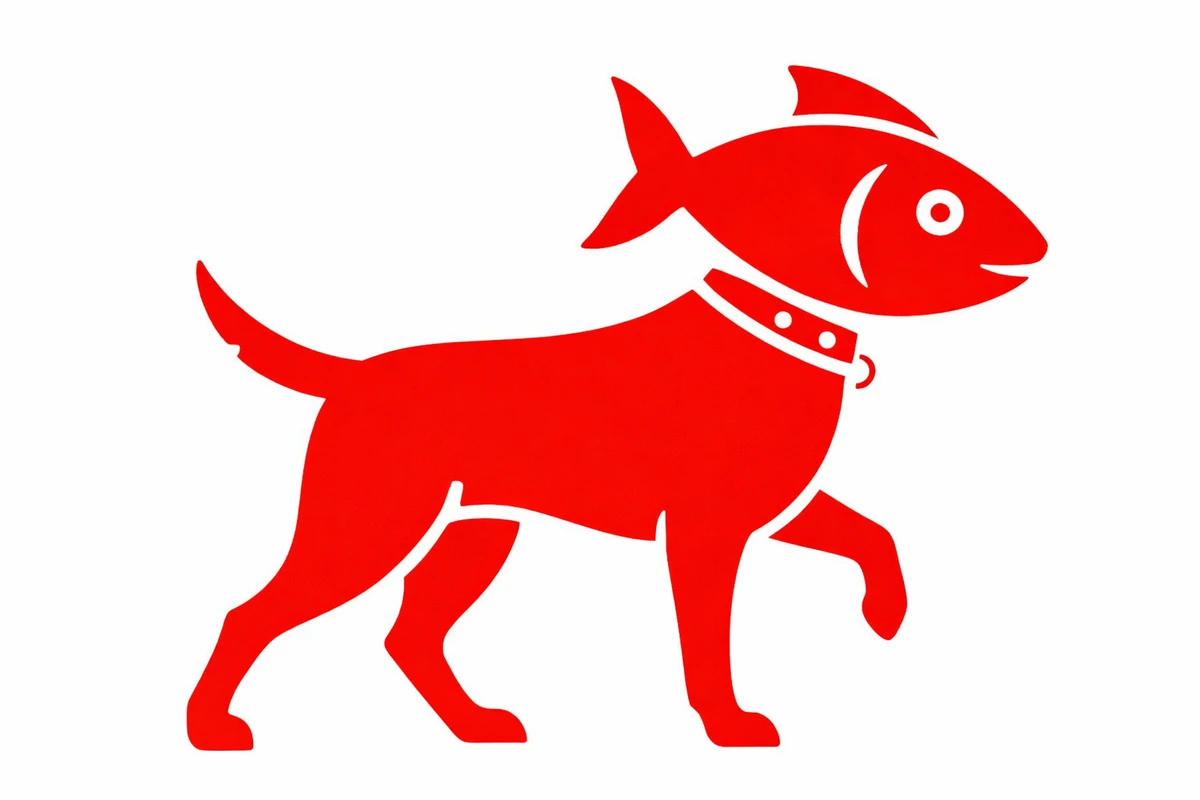
A logo file and a single sentence. That was the starting point. The logo was Fish Dog's own: a red silhouette of the creature that would become our accidental mascot. The prompt, fed to OpenAI's Sora, read: "Please generate a movie trailer for the superhero movie 'Fish Dog' that features the fish-dog character from the image attached. It's a gritty high-octane action movie by Michael Bay and Jerry Bruckheimer." Sora returned a 14.5-second clip. No script, no character names, no plot synopsis, no branding guidelines beyond what was already baked into the logo. Just raw AI-generated footage of something that appeared to be a fish-headed dog sprinting through a rain-soaked city.
Within four hours, a fleet of Claude Code agents had turned that clip into a fully operational commercial enterprise: a promotional website, a cinematic trailer breakdown, five original merchandise designs, 35 products across 15 categories, a working Shopify storefront with Printful print-on-demand fulfilment, and a consumer research study testing audience reactions to the whole thing. The total human input amounted to a handful of prompts and one or two course corrections. Everything else was autonomous.
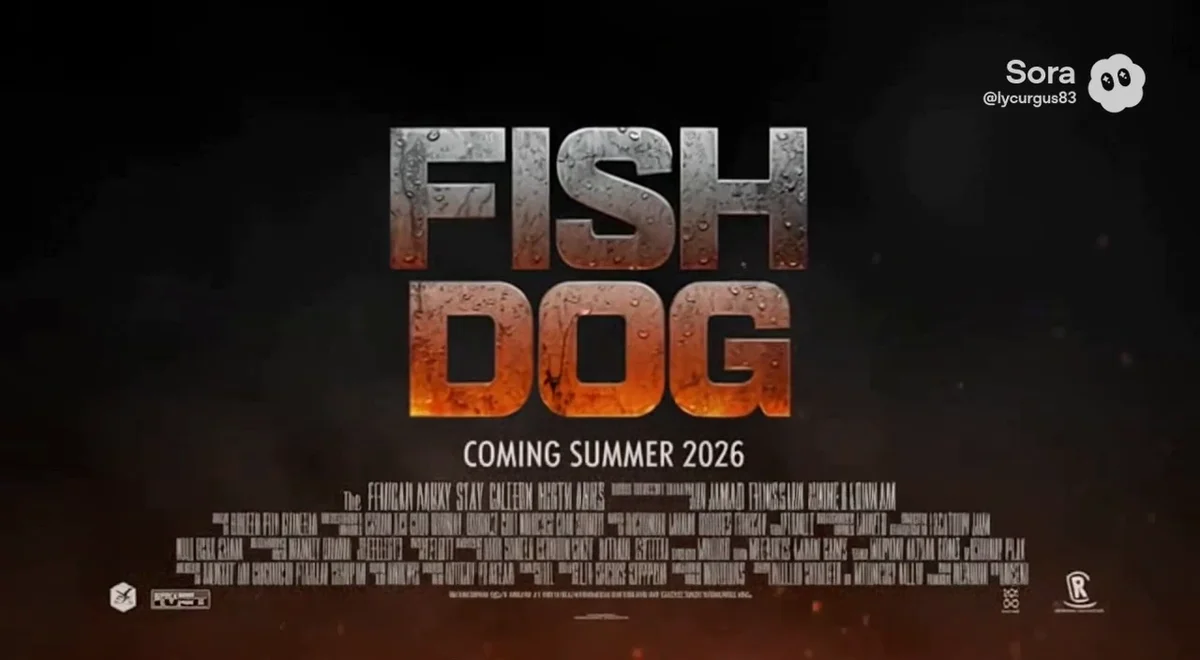
This is not a thought experiment. The website is live. The shop takes real payments. The research study published real findings. And the entire operation was orchestrated by AI agents working in sequence, each one picking up where the last left off.
The question this raises is not whether AI agents can do creative work. It is how far a chain of autonomous agents can run before a human needs to intervene, and what that means for the economics of launching products.
From Footage to Worldbuilding
The first agent's task was analytical. Given the 14.5-second trailer that Sora had produced, it extracted 29 frames using ffmpeg at two frames per second, then performed a scene-by-scene visual analysis. From the footage alone, it identified four characters, inferred their roles and relationships, constructed placeholder names and backstories, and built a complete narrative framework.
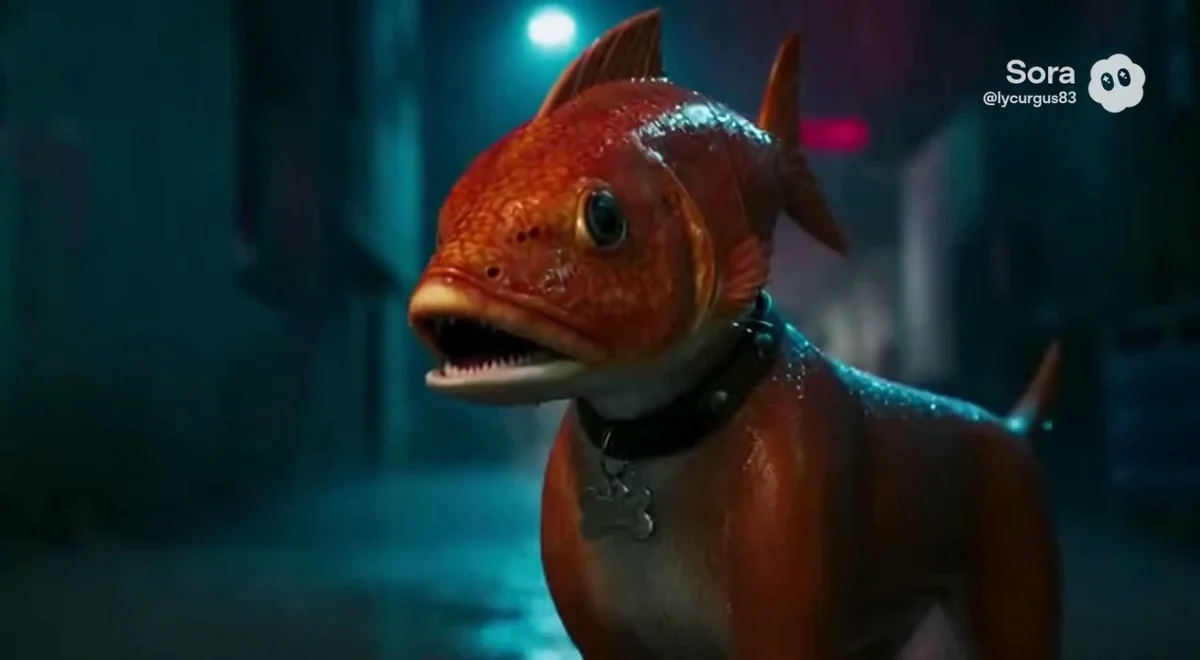
The fictional universe that emerged was surprisingly coherent. A biotech corporation called Meridian BioSystems. A black-budget programme called Project CHIMERA. A genetic hybrid designated Subject FD-01. A scientist who releases the creature, a military contractor hunting it, a detective caught in the middle. All of this reverse-engineered from freeze-frames of a fish-headed dog running past cars and riding a missile.
Key insight: The agent did not hallucinate a story and then look for evidence. It worked forensically, treating each frame as primary source material, cataloguing visual evidence (a lanyard here, a police badge there, a briefcase in a warehouse) before constructing narrative from the facts. This is closer to how a film studies researcher works than how a chatbot generates fiction.
Building the Website
A second agent took the trailer analysis and built a complete React website using Vite, framer-motion, and hand-crafted CSS. No templates. No UI framework. The design system was derived entirely from the trailer's visual language: a colour palette of deep navy, teal, and fire orange; typography choices that evoke military-tactical aesthetics; angular clip-paths on every card and button.
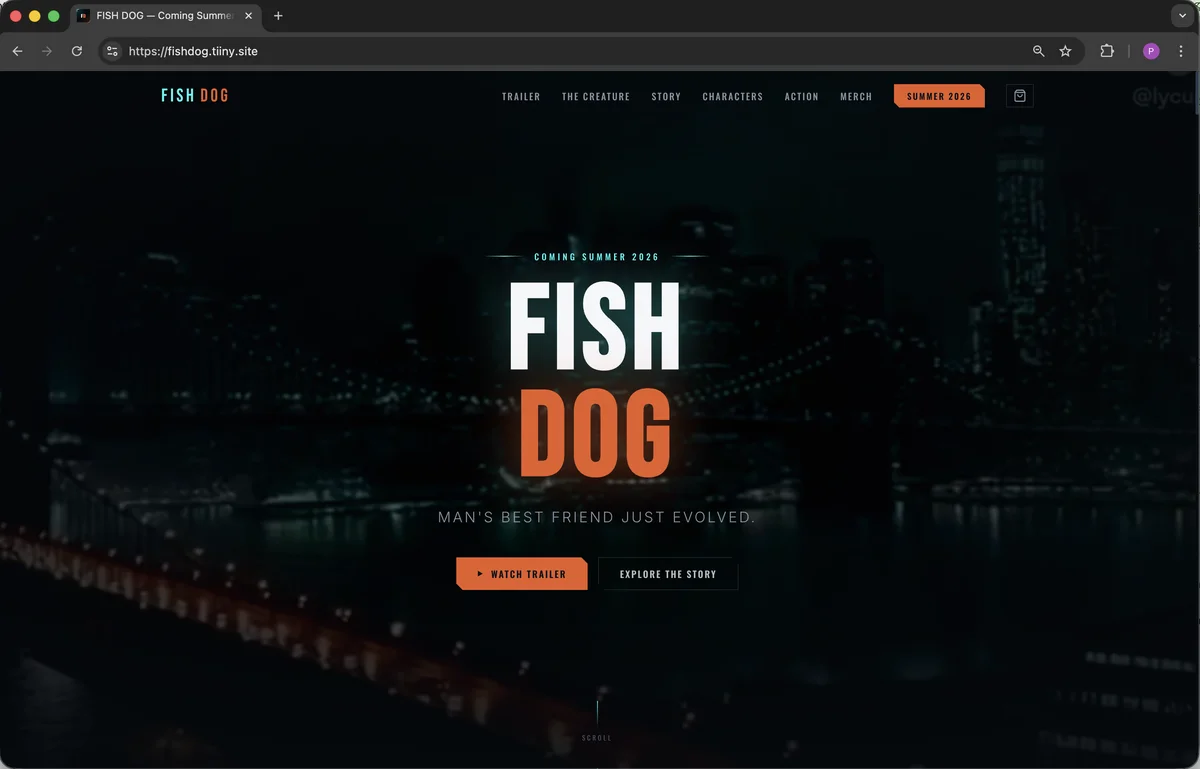
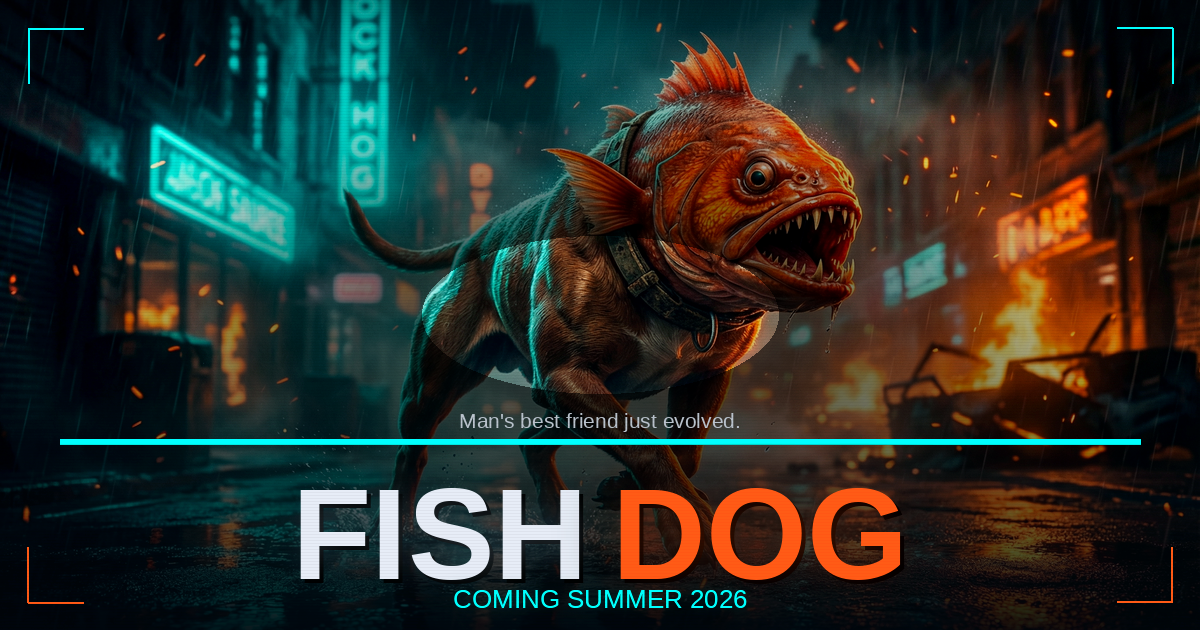
The site comprises 11 components: a parallax hero section, a YouTube trailer embed, a creature spotlight with abilities breakdown, a three-act story narrative, a character grid, an action scene gallery, an emotional pier scene, a dynamic merchandise store, and supporting navigation and footer elements. Every section triggers scroll-based animations via Intersection Observer.
All website copy was written to match the tone of a Jerry Bruckheimer production. Taglines were generated ("Man's best friend just evolved", "Half fish. All bite."), character biographies composed, and a full synopsis written. A fictional pull quote was attributed to the scientist character: "You don't cage something like that. You don't kill it either. You just pray it remembers you were kind."
Merchandise at Scale
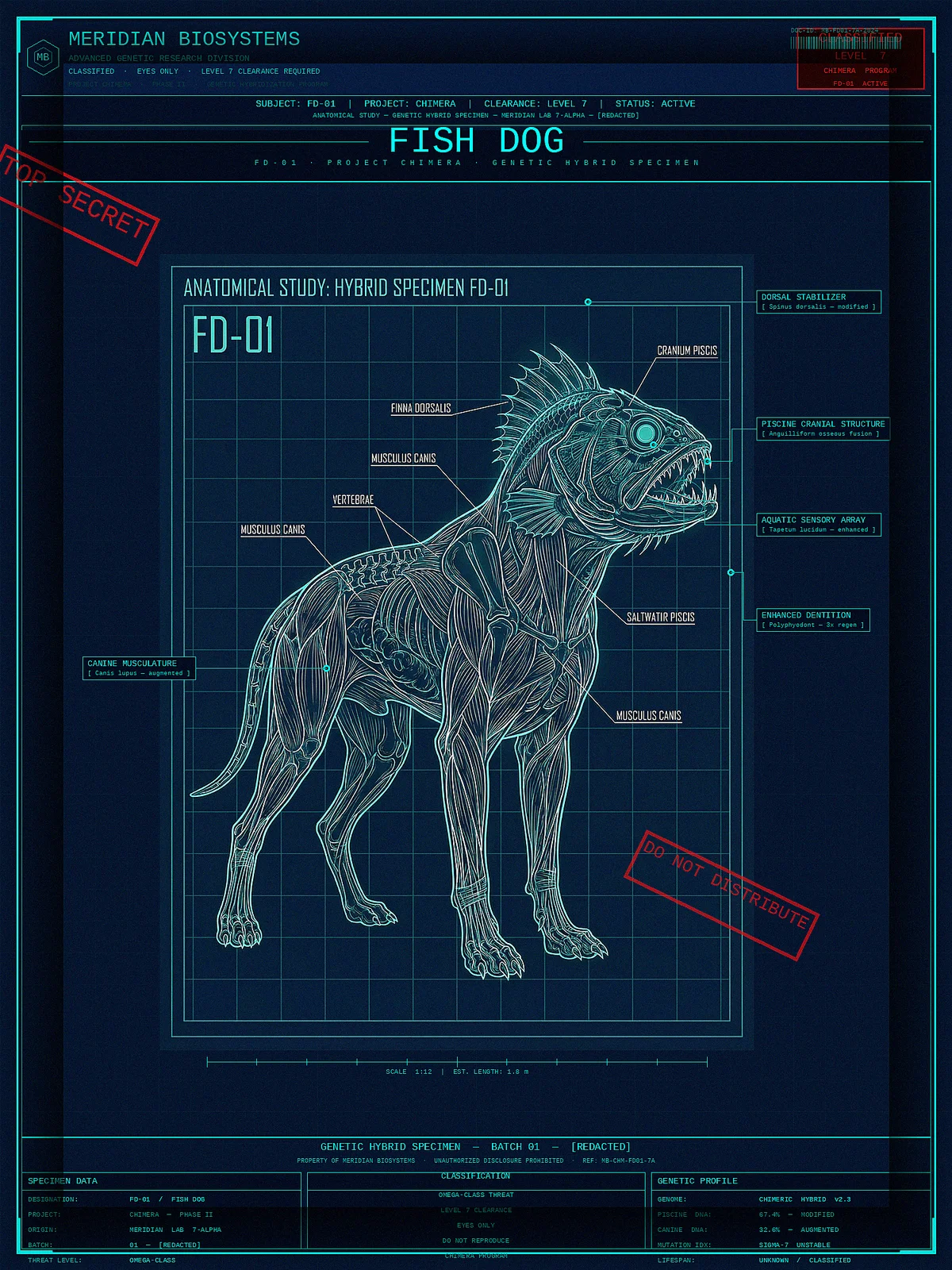
The merchandise pipeline is where the agent chain becomes genuinely impressive. A design agent used the Manus AI API to generate five distinct merchandise concepts: a streetwear graffiti treatment, a classified military-patch insignia, a minimal silhouette, a vintage anatomical specimen blueprint, and an official logo lockup. Supplementary designs were extracted and enhanced from trailer frames using Pillow.
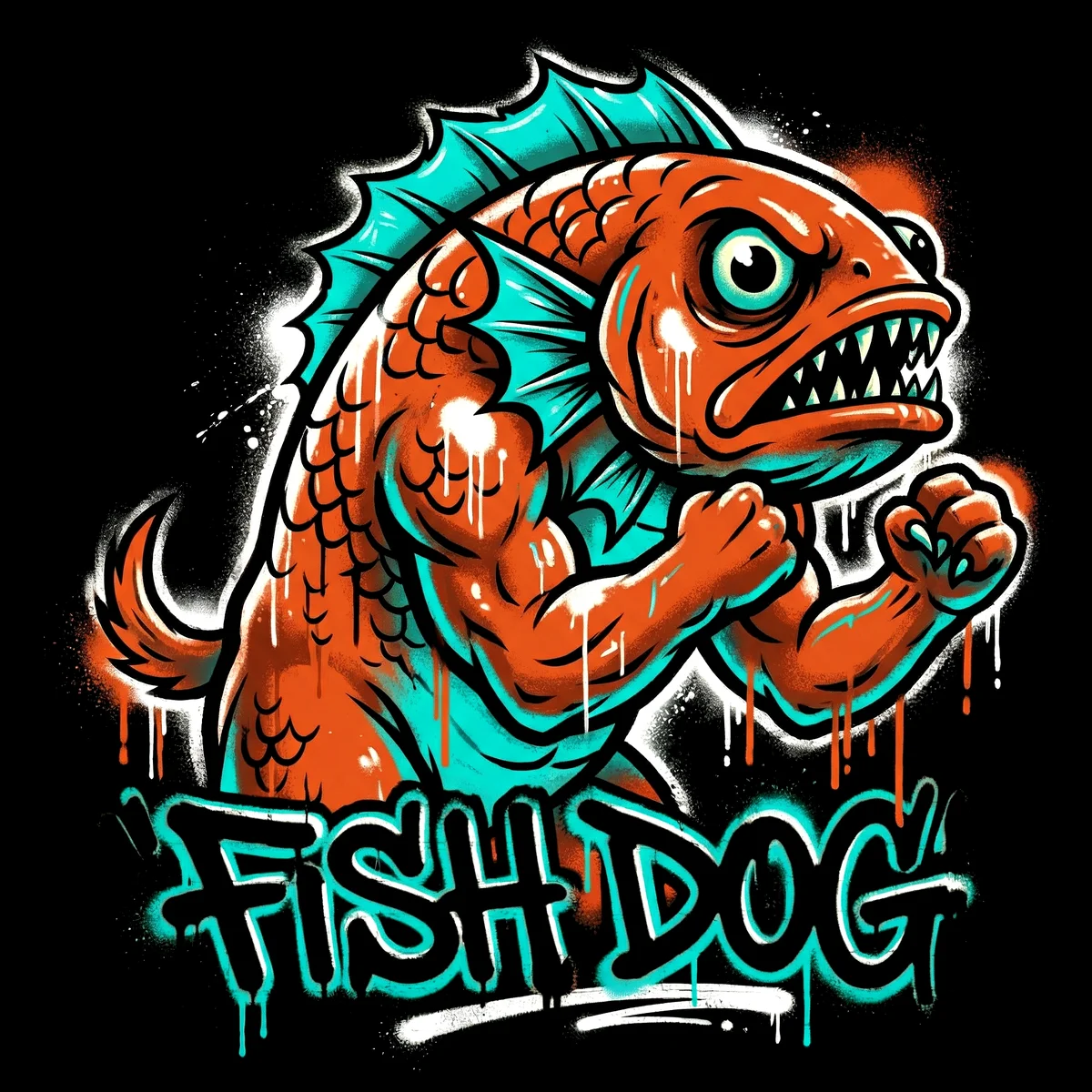
The streetwear graffiti design (above) became the basis for t-shirts, long sleeves, tank tops, mugs, tote bags, pillows, stickers, and can coolers. The vintage specimen blueprint (below) was used for hoodies, posters, bucket hats, fanny packs, and gaming mouse pads. Each design was strategically assigned to the product types where it would read best.
A commerce agent then took these designs and built an end-to-end retail operation. It uploaded design files to Printful's file library, queried product catalogues for variant IDs and print specifications, created 35 products via the Shopify Admin API (complete with HTML descriptions, size and colour variants, SKUs, and pricing), published them to all sales channels, and generated photorealistic mockup images using Printful's Mockup Generator API.
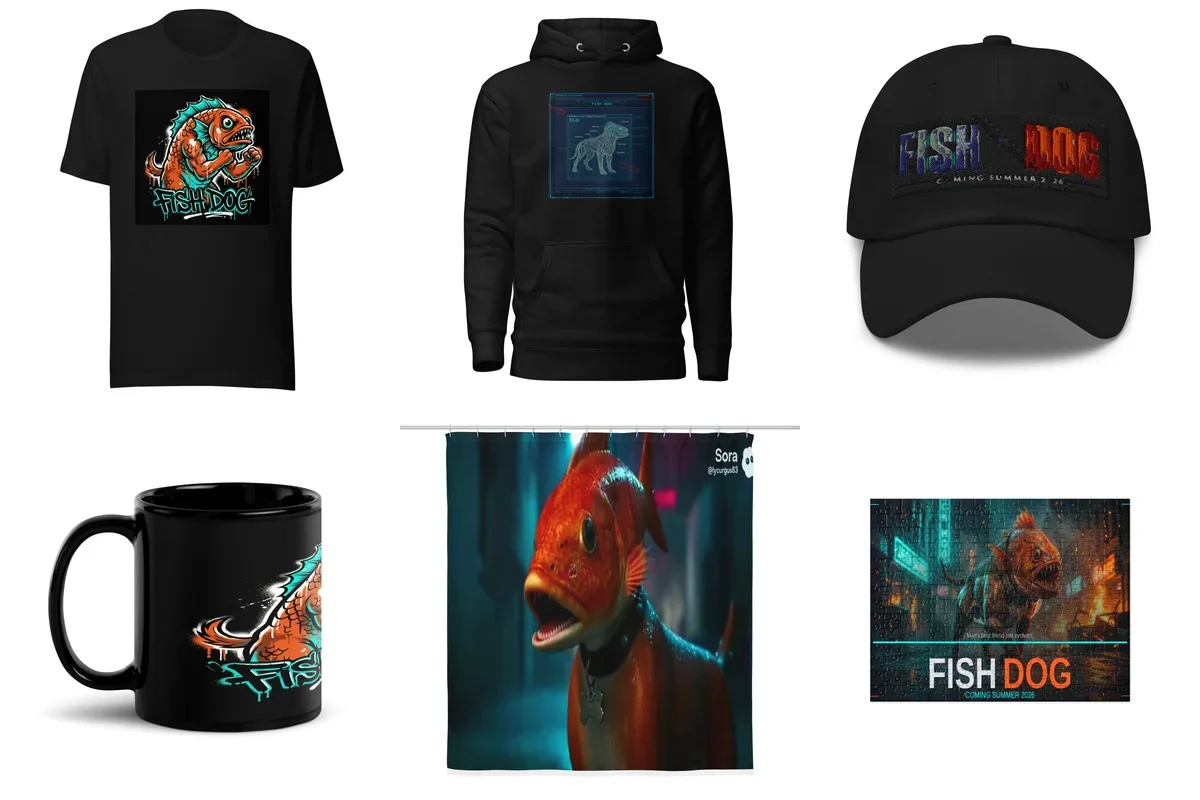
The product range spans t-shirts and hoodies to shower curtains, jigsaw puzzles, fanny packs, pet bandanas, and socks. Prices run from $3.99 for a die-cut sticker to $89.99 for a framed poster. The merchandise store on the website loads all products dynamically via Shopify's Storefront GraphQL API, meaning new products appear automatically without touching a line of code.
The mockup generation alone required navigating Printful's strict rate limits (two requests per 60 seconds for new stores), managing asynchronous task polling, handling placement-specific configurations for each product type, and uploading the resulting images to Shopify as base64-encoded product photos. A two-pass approach handled the eight products that failed initial mockup generation due to incorrect placement names.
The Research Study
With the website, store, and merchandise in place, a final agent did something rather different. It used Fish Dog's own synthetic research platform (the company having recently, and somewhat prophetically, rebranded from FishDog) to test consumer reactions to the movie concept.
Twenty Americans, aged 17 to 80, were shown the trailer and asked seven questions about the creature design, emotional resonance, cinema-going intent, and improvement suggestions. The results were published as a full research study and are rather illuminating.
Zero participants said they would see the film on opening weekend. The creature design was deemed "goofy, not scary", creating what the study called a positioning problem for an action thriller. But when shown the sunset pier scene depicting the bond between creature and creator, even the harshest critics softened.
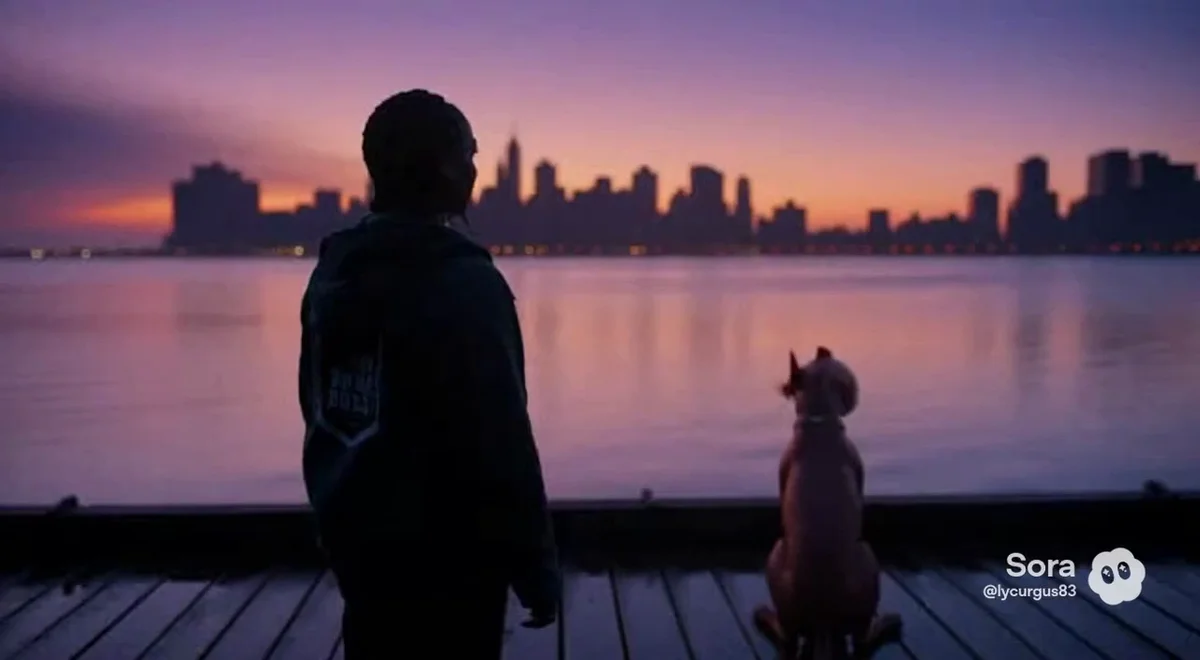
The emotional core tested as the film's strongest element by a wide margin. The study drew a striking parallel to Paramount's 2019 "Ugly Sonic" debacle, where the original Sonic the Hedgehog design was so poorly received that the studio spent millions on a post-trailer redesign. The difference: Fish Dog tested its concept before public backlash, at near-zero cost, in minutes rather than months.
What This Proves About AI Agent Chains
The conventional wisdom about AI agents is that they are good at isolated tasks but struggle with multi-step workflows requiring coordination, context preservation, and judgment calls. The Fish Dog project is a direct counter-example.
The agent chain maintained coherence across seven distinct phases:
Analysis (trailer deconstruction, worldbuilding)
Design (website architecture, component development, CSS)
Branding (favicons, OG images, social assets via Manus AI)
Creative (five merchandise design concepts)
Commerce (Shopify and Printful integration, OAuth flows, API orchestration)
Production (35 products, 148 variants, mockup generation, image pipeline)
Research (consumer study design, execution, insight extraction, publication)
Each phase produced artefacts that subsequent phases consumed. The trailer analysis informed the website copy. The website's colour palette guided the merchandise designs. The merchandise designs were uploaded to Printful, synced to Shopify, and rendered in the website's store component. The finished product was then tested with synthetic consumers. This is not prompt chaining. It is an autonomous supply chain.
The Economics
Consider what this pipeline would cost using traditional methods. A web design agency would quote four to six weeks and $15,000 to $40,000 for a site of this complexity. Merchandise design, product photography, and e-commerce setup would add another $5,000 to $15,000. A consumer research study with 20 participants, seven questions, and a published report would run $8,000 to $25,000 through a traditional agency. The total: somewhere between $28,000 and $80,000, delivered over two to three months.
The agent chain completed the same scope in roughly four hours. The marginal cost was API calls: a few dollars in compute, a Shopify subscription, and Printful's free tier. Total cash outlay: under $100.
This is not a comparison that traditional agencies will enjoy reading. But it is important to be precise about what the agents did and did not do. They did not exercise taste. They did not make strategic decisions about brand positioning. They did not have the conversation with a client about what the brand should feel like. What they did was execute, at extraordinary speed and negligible cost, once the creative direction was established.
Limitations and Honest Observations
The Fish Dog project is a demonstration, not a claim of perfection. Several things are worth noting honestly:
Two of the five Manus-generated merchandise designs were weak. The agent could not evaluate quality; a human had to select the three that worked.
The Printful mockup pipeline required a two-pass approach because eight products failed on the first attempt due to incorrect placement configurations.
The hosting platform overrides Open Graph tags on the free tier, breaking social sharing previews.
The consumer research found that the creature design does not work for an action thriller audience. This is a genuine finding, not a convenient one.
The most important limitation is the one that matters for anyone considering this approach for real products: the agents are excellent at execution but do not replace creative judgment. A human still needs to set the brief, evaluate the output, and decide what to ship. What the agents eliminate is the months of production work between "here's what we want" and "here it is, live, taking orders."
What Comes Next
Fish Dog started as a joke. A company rebranding to a name so absurd that it demanded an equally absurd demonstration of what AI agents can build. But the underlying capability is serious. If a fleet of Claude Code agents can turn a 14.5-second clip into a functioning e-commerce operation with 35 products, consumer research, and a published website, then the question for every product team, marketing department, and startup founder is: what are you still doing manually that an agent chain could handle in a weekend?
The Fish Dog website is live. The merchandise store is open. And the research study is public. Go and look. Then consider what four hours of AI agents could do for your next launch.