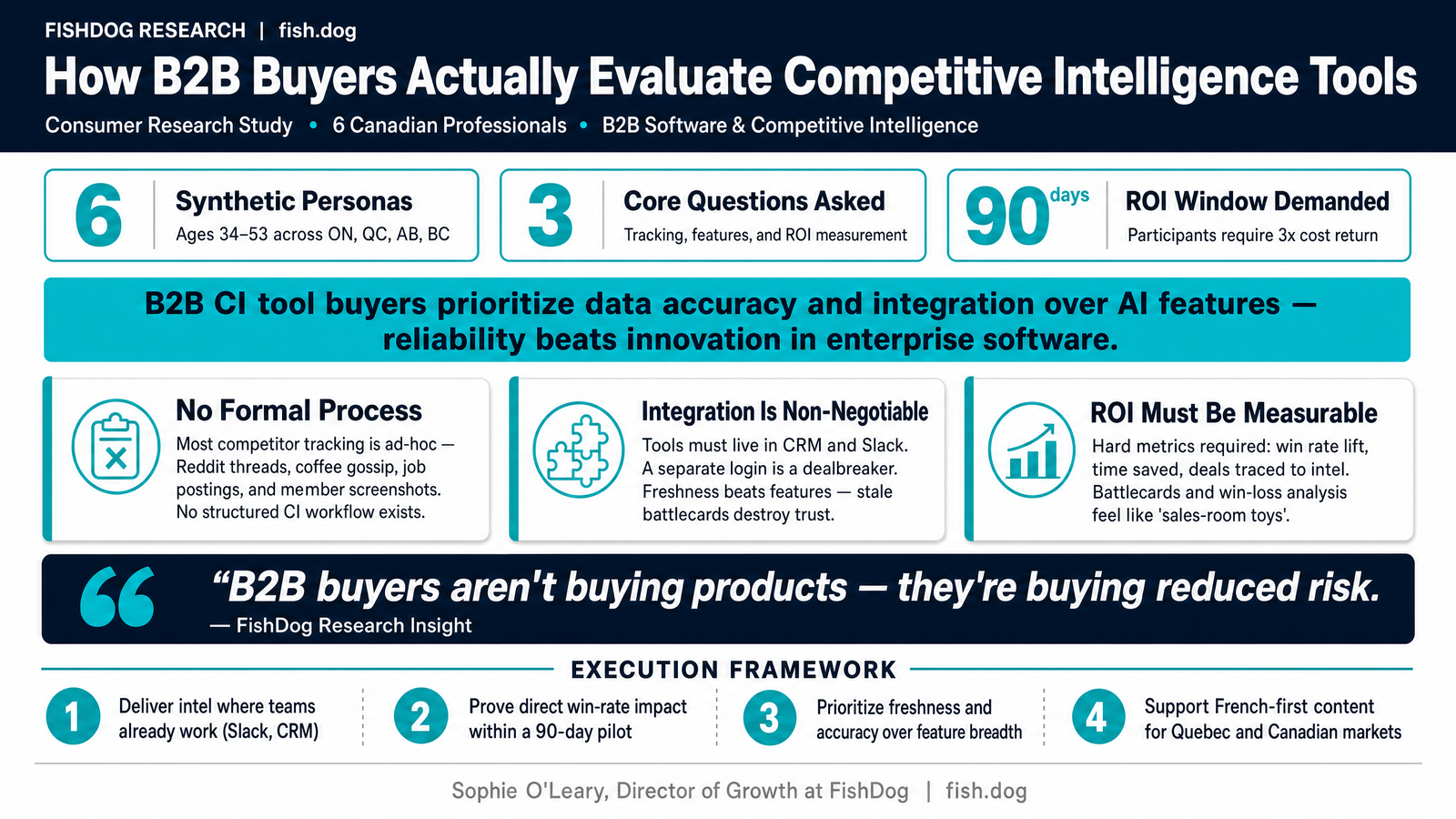
How B2B Buyers Actually Evaluate Competitive Intelligence Tools
Six Canadian professionals. Three questions about competitive intelligence. One humbling truth: ...
Read StudyTag: Product Marketing
Product marketing sits at an awkward intersection: it owns positioning, messaging, pricing research, competitive intelligence, customer segmentation, sales enablement, and launch — but rarely owns the headcount budget to do all of these things to a high standard. The result, in most companies, is a product marketing team forever short of evidence: too many opinions, not enough data, not enough hours in the week. This page is for the PMM teams trying to fix that.
FishDog's product marketing series covers the workflows a PMM team actually runs: how to validate positioning before a launch, how to test messaging across segments, how to research pricing, how to build competitive battlecards from primary evidence rather than vendor decks, how to do win/loss analysis at scale, and how to assemble a PMM operating system. The aim is to make the work fast enough that one PMM can do what used to require an agency engagement, with better evidence at the end.
What You'll Discover
Try a PMM workflow on your product at fish.dog
FAQ
What does product marketing actually do?
Product marketing owns positioning, messaging, pricing research, competitive intelligence, customer segmentation, sales enablement, and launch coordination. The remit varies by company, but the common thread is: making sure the right product reaches the right buyer with the right message and the right competitive narrative.
Can AI agents replace product marketers?
No. AI agents and synthetic research dramatically accelerate the evidence-gathering work product marketers do — running positioning tests, validating messaging, exploring pricing — but the strategic judgement (which segments to prioritise, what positioning to commit to) remains a human decision. The pattern is augmentation, not replacement.
What is a PMM operating system?
A PMM operating system is a documented, repeatable set of workflows a product marketing team runs across the year: positioning reviews, messaging refreshes, pricing sensitivity tests, win/loss tracking, competitive intelligence updates, sales enablement content audits. The article in this collection on building a PMM operating system covers the structure end to end.
How do you do product marketing research without a research budget?
Synthetic research platforms make most product marketing research workflows runnable for a fraction of traditional cost: a positioning test that used to require a 400-person panel survey can run in 20 minutes against 100 synthetic personas. The how-to articles in this collection give specific study designs you can replicate.
Six Canadian professionals. Three questions about competitive intelligence. One humbling truth: ...
Read StudySignal from our synthetic populations, product updates, and the occasional hot take. No spam.