
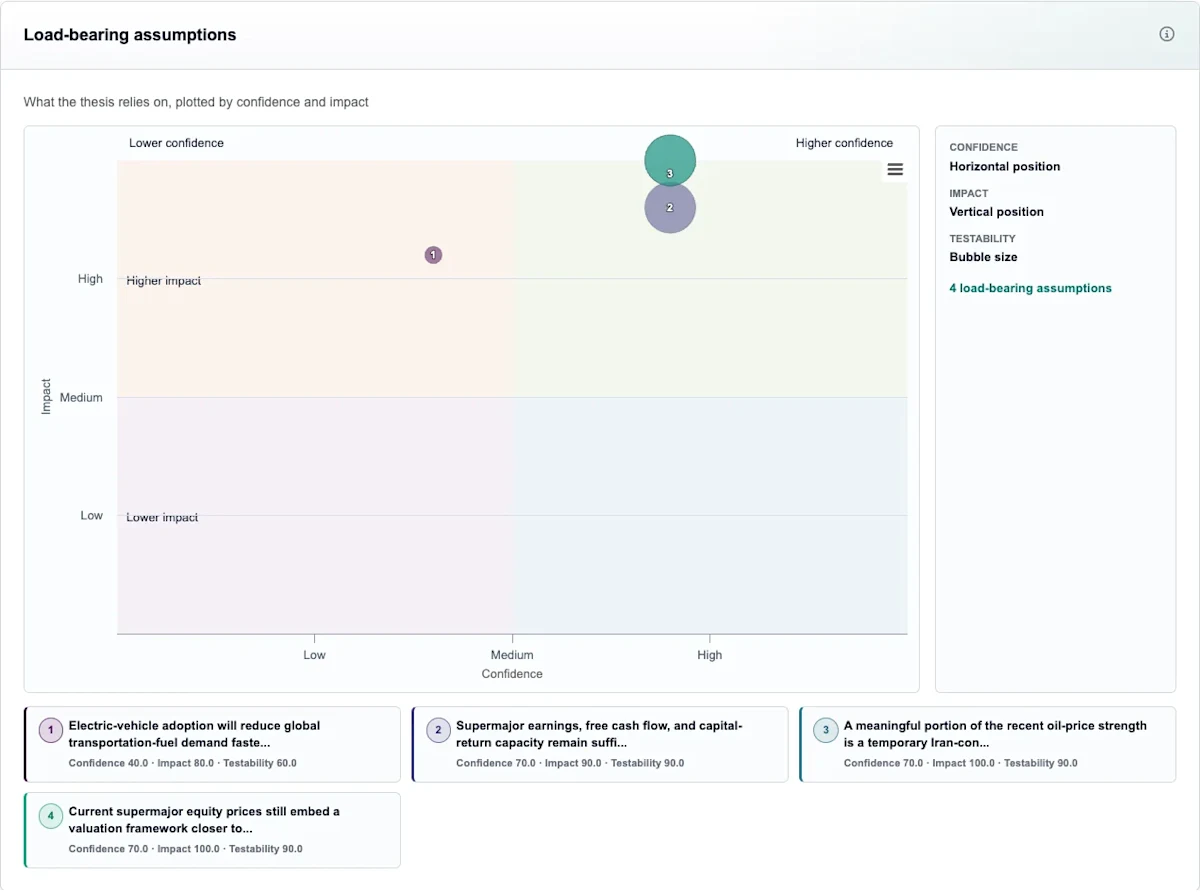
Thesis Lab now turns a completed research run into a single Thesis Summary: one page that states the thesis, reaches a verdict, walks the evidence, and links every line back to the panel that produced it. A finished thesis can carry a dozen expert-call panels and as many channel-check studies, and the Summary reads across all of it.
A finished run used to leave an analyst with the raw material and none of the synthesis. Dozens of channel-check studies sat in one tab; expert-call panels and their transcripts sat in another. Reading across all of it - what did the panel actually conclude, where did the evidence agree, where did it cut against the thesis - fell to the analyst, by hand, every time. The Summary does that read-across and presents it as one structured report, organised the way an analyst would defend a position.
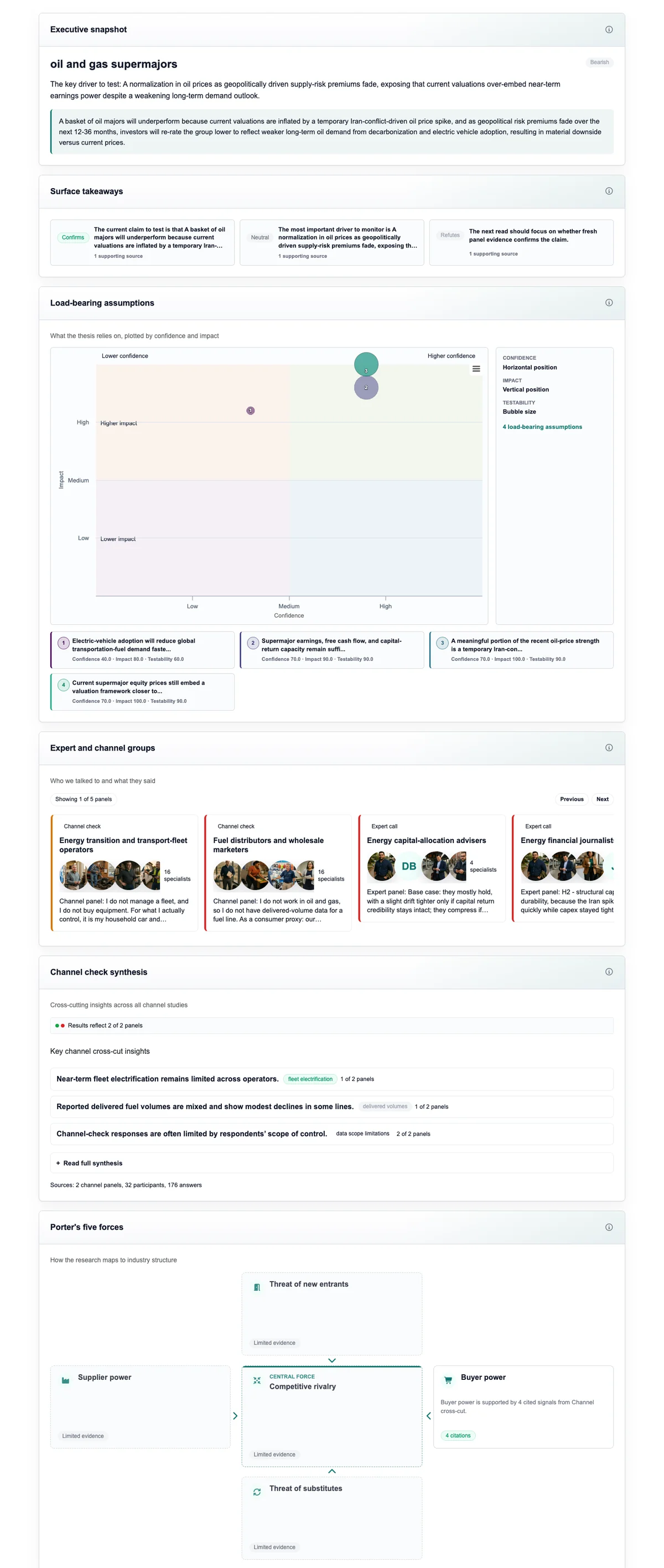
The Thesis Summary in full: a verdict up top, then the thesis's assumptions, the recruited panels, and the cross-cut synthesis, each section filling in as the research completes.
The verdict, up top
The report opens with an Executive snapshot: the thesis stated as a falsifiable claim, a bull or bear stance, and the single driver the research set out to test. Directly beneath it, Surface takeaways distil the whole run into four to six one-line reads, each tagged confirms, refutes, or neutral, and each showing how many experts and channel checks stand behind it. At the foot of the page, a Final summary pulls the run into a single defensible narrative - the paragraph an analyst could read into a Monday-morning meeting - with evidence markers that open to the quotes behind each claim.
What the thesis rests on
Two sections expose the thesis's own structure. Thesis breakdown decomposes the position into the handful of testable claims it depends on. Load-bearing assumptions, shown above, plots each assumption by confidence and impact, with the size of each point showing how testable it is - a quick read of which assumptions are both pivotal and shaky, the ones worth worrying about.
What the research collectively shows
This is where the run stops being a pile of interviews and becomes an argument. Expert call synthesis and Channel check synthesis cross-cut every panel into a handful of complete-sentence insights, each carrying the theme it belongs to, the consensus behind it - four experts support, one against - and the quotes on both sides. Counter-thesis evidence is the falsifiability audit: for each load-bearing assumption it shows whether the research strengthened, weakened, or complicated it, with the initial counter-claim and the refined one after the evidence came in. Porter's five forces maps the research onto industry structure, marking each force by how much panel evidence actually reached it.
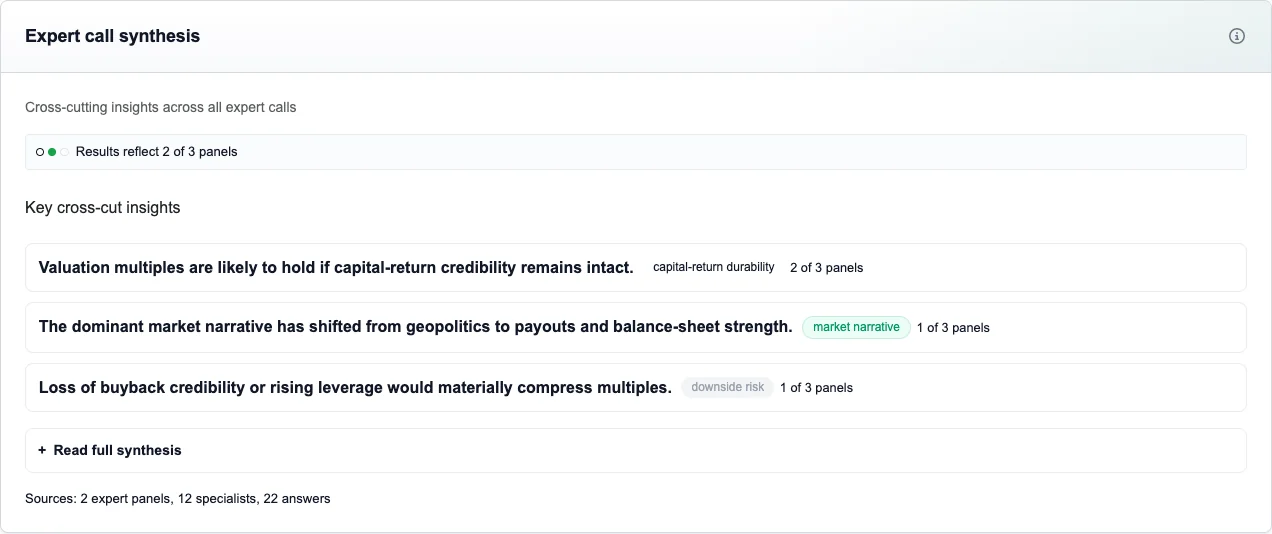
Expert call synthesis lifts the run from what each expert said to what the panel collectively shows - complete-sentence insights, each with its theme and the number of panels behind it.
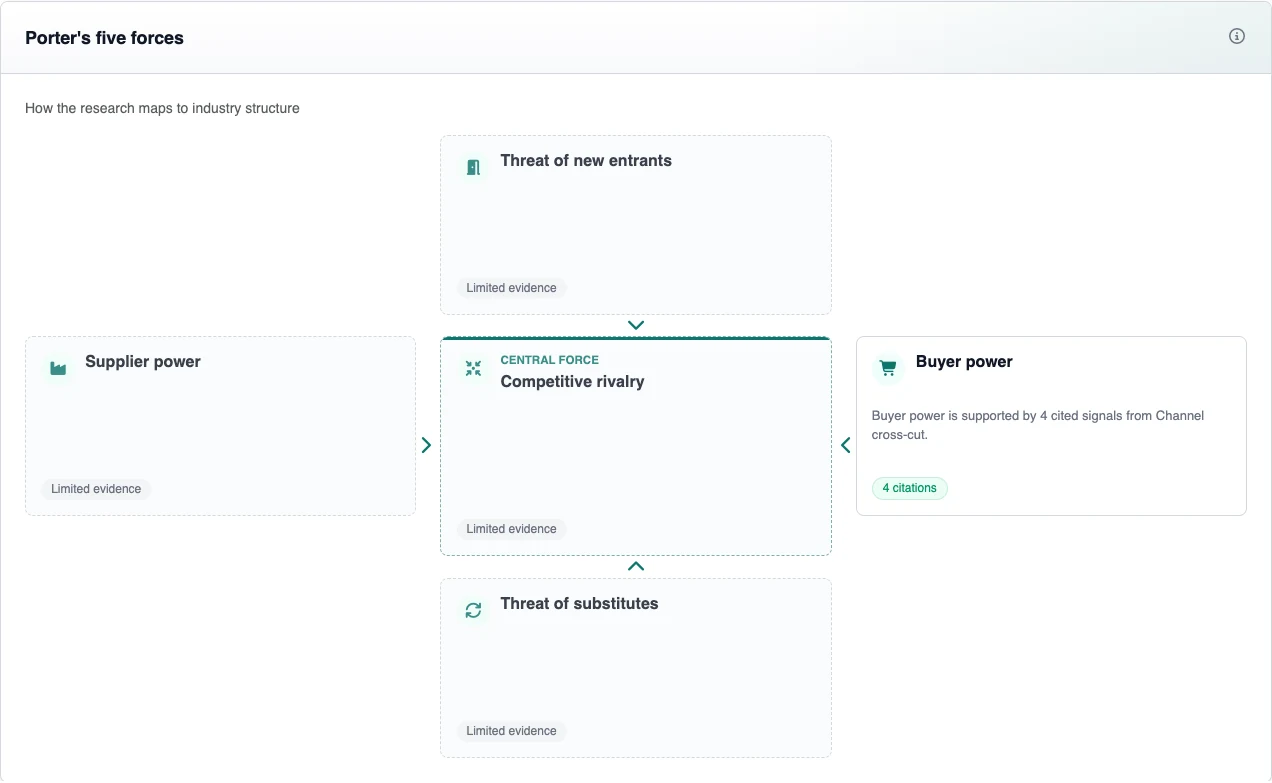
The research mapped onto Porter's five forces, competitive rivalry at the centre. Forces that little panel evidence reached are labelled, not padded.
The evidence, one click away
Nothing on the page is asserted without a path back to its source. Every card opens a side drawer holding the supporting quotes, the counter-evidence, the panel, and the source behind the finding. Alongside these sit the research-scope sections - the recruited expert-call and channel-check panels, the completed channel studies, and a companies overview that sets the research read against the market tape - plus, where the data supports them, a participant map and a word cloud of the terms that kept recurring.
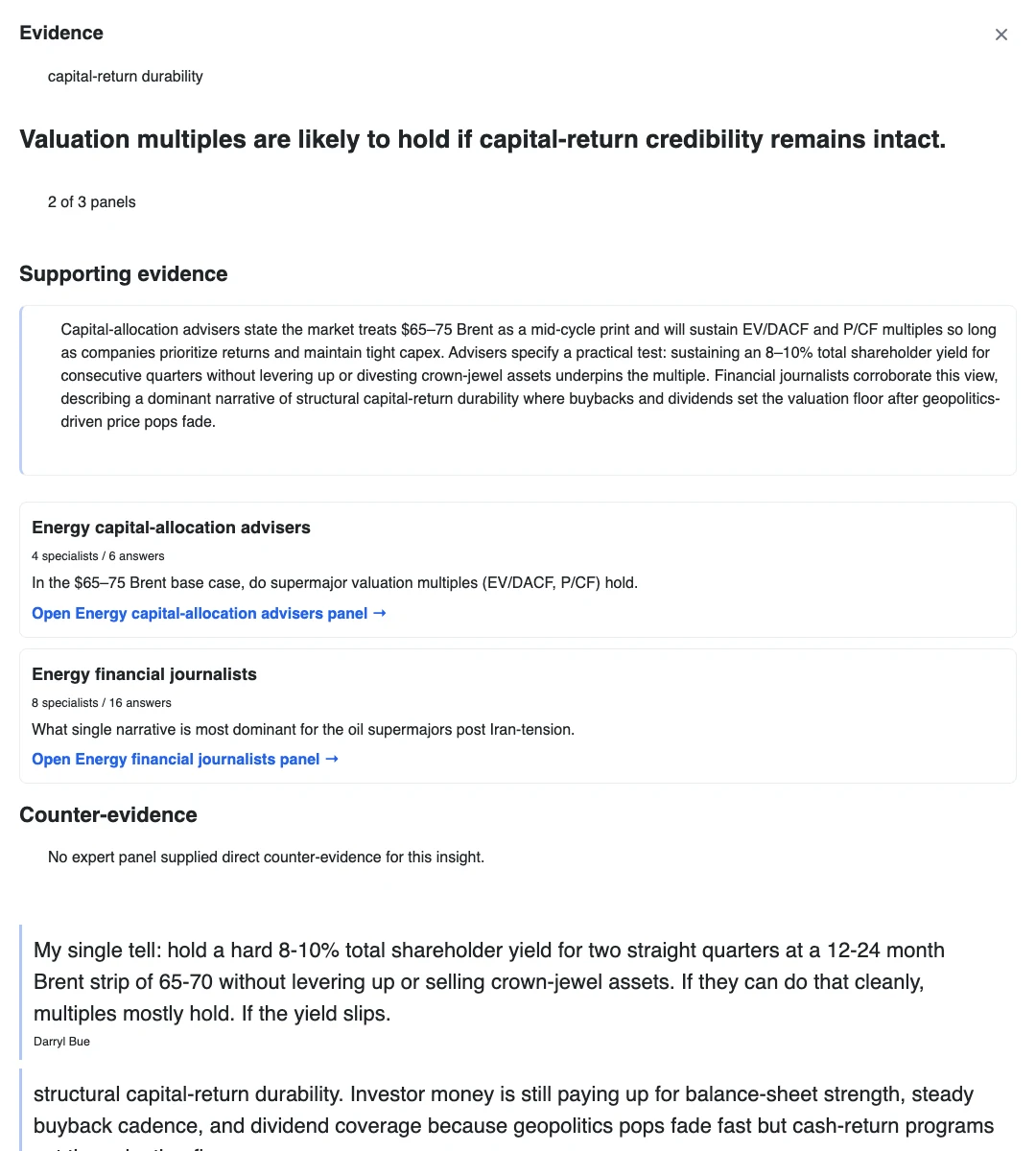
Every card opens onto its evidence: the supporting quotes, the counter-evidence, and the source behind each finding.
A Voices carousel surfaces the panel's own words verbatim, each quote tagged with the specialist who said it and the panel it came from. A Sources table closes the report with every input it drew on and a count of how often each was cited - a complete audit trail back to the interview or study behind any claim.
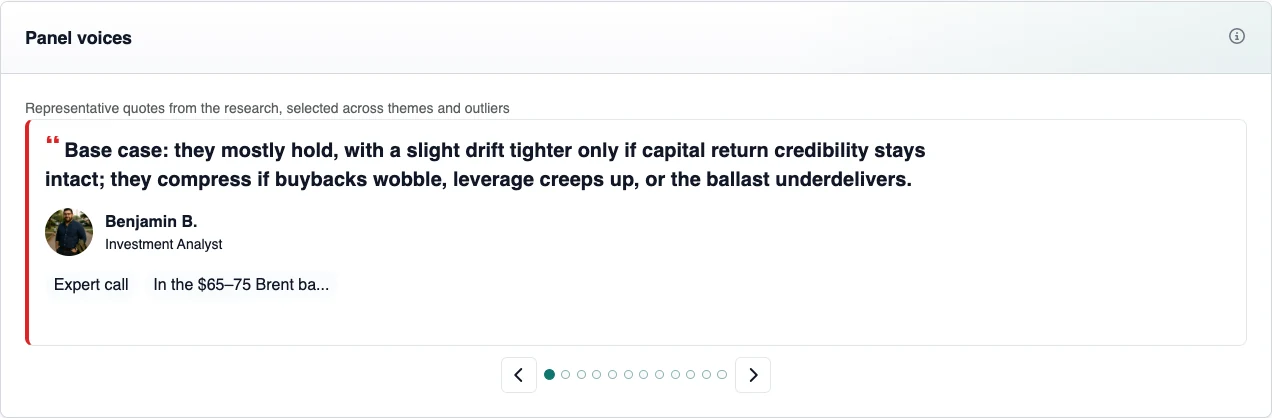
Panel voices surfaces the recruited panel's own words verbatim, each tagged with the specialist who said it and the panel it came from.
Built to be defended
The Summary is built for an analyst who has to stake their name on a call. Quotes are pulled verbatim from real answers, never paraphrased by a model, so nothing in the Voices, Sources, or drawers is invented. Where a section has thin evidence it says so rather than padding - a force with no panel support reads limited evidence, not filler. And because each section fills in independently, the report is useful while the run is still going: the verdict, breakdown, and assumptions are readable the moment the thesis is finalised, before the last panel reports.
To try it, open a thesis whose Channel Checks and Expert Calls have finished, go to the Summary tab, and generate it; the page fills in as the synthesis completes. The Thesis Summary is on by default for every Thesis Lab customer, with nothing to enable. It builds on pre-recruitment review from 27th May and the API and MCP layers that went GA on 23rd May. The full Thesis Lab walkthrough is at fish.dog/thesis-lab.