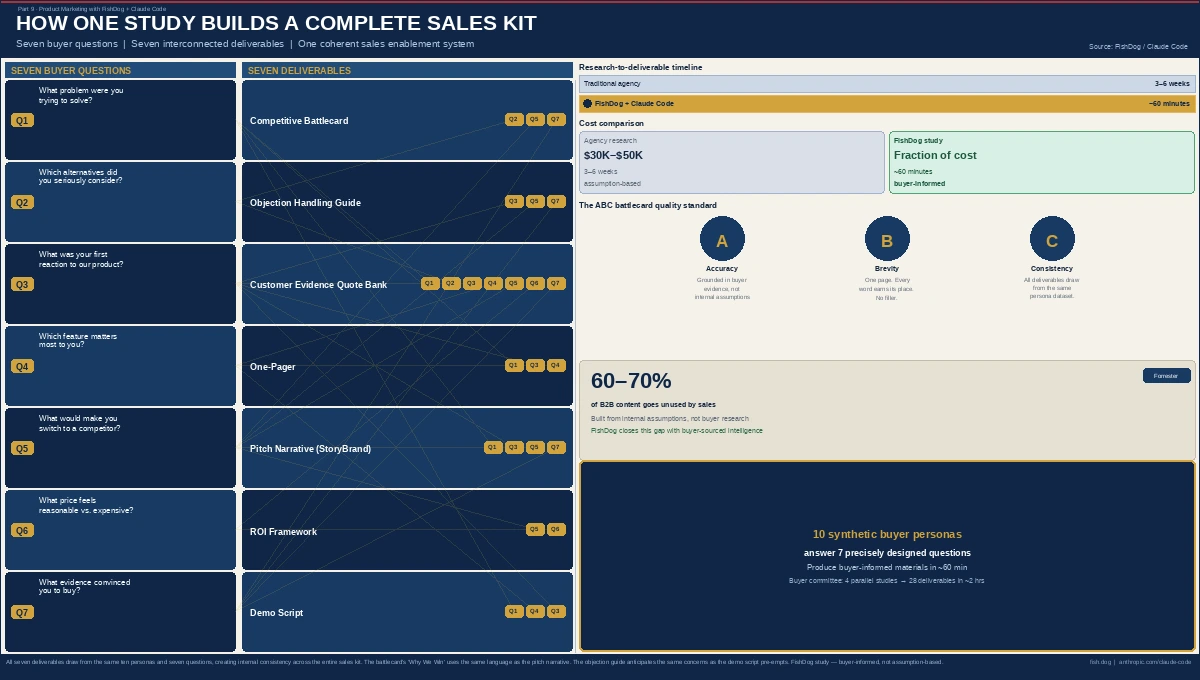
How to Build Sales Enablement with Claude Code and Ditto
The average sales representative spends sixty-five percent of their time on non-selling activities, according to ...
Read ArticleTag: Sales Enablement
Sales enablement teams sit in an uncomfortable position: held responsible for sales productivity, but rarely given the budget or time to do real research on what is actually failing in the pipeline. The result is that most enablement content — battlecards, objection handlers, competitive comparisons — is written from internal opinion rather than from primary evidence. The articles below cover how to build the same materials from synthetic research, faster and with stronger sourcing.
The pieces in this collection are practical: how to assemble a competitive battlecard with synthetic research as the primary source, how to use AI agents to maintain enablement content as a continuous rather than annual exercise, and the wider operating-model question of how a small enablement team can produce more material than a large one. Each article includes specific FishDog study designs you can reuse.
What you'll find
Build your next battlecard at fish.dog
The average sales representative spends sixty-five percent of their time on non-selling activities, according to ...
Read Article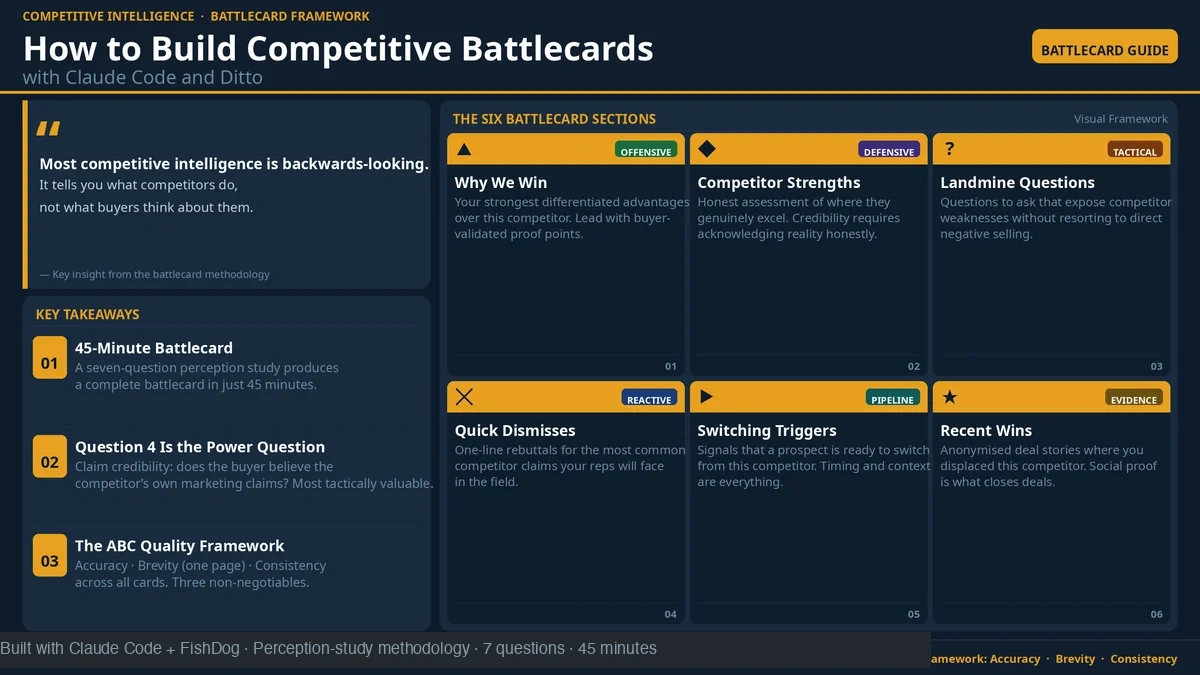
Most competitive intelligence is backwards-looking. Tools such as Klue and Crayon track what competitors ...
Read Article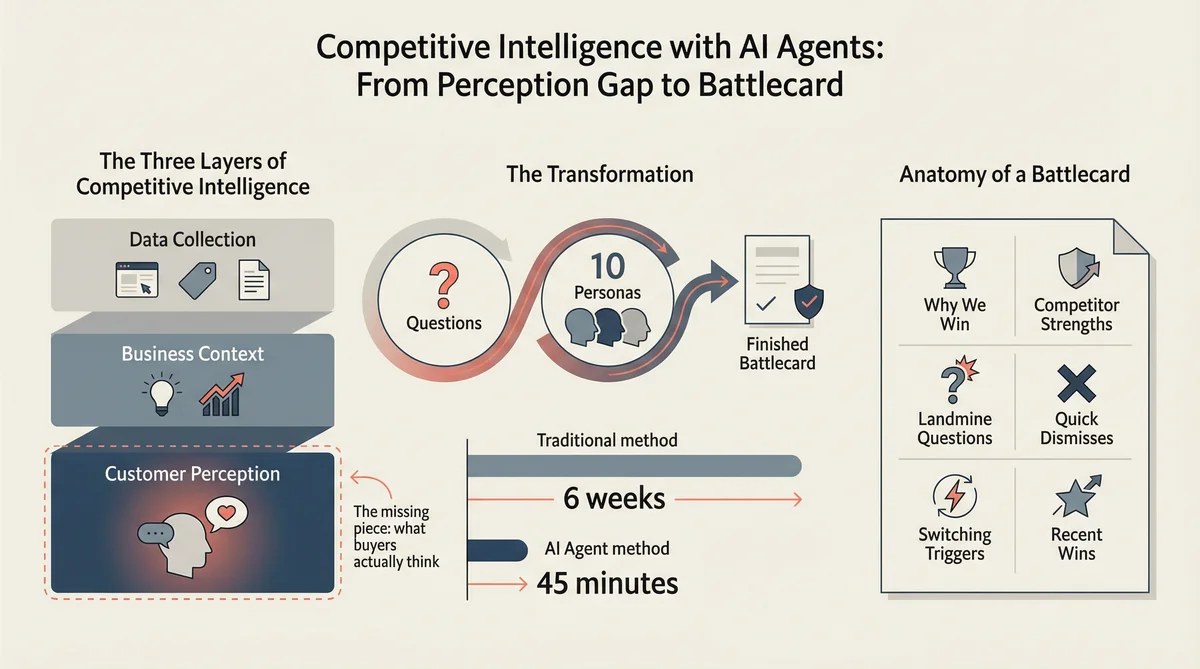
Sixty-eight percent of sales opportunities are competitive. That statistic, from ...
Read ArticleSales enablement is the function that produces and maintains the materials sales teams use in the field: competitive battlecards, objection handlers, value-proposition comparisons, customer reference assets, and case studies. The aim is to make the average sales rep perform like the best one by giving them the strongest available materials at the right point in the sales cycle.
A modern battlecard combines three sources: documented competitor positioning (websites, decks, marketing material), real customer perception (synthetic or traditional research on how prospects actually compare you), and field intelligence (sales rep observations from live calls). The article in this collection walks through the build process from research to finished deliverable.
Traditionally, annually — because the cost of refreshing them was high. With AI agents running synthetic competitive studies, monthly refreshes are routinely possible. The strategic argument: in a fast-moving competitive landscape, an annual battlecard is months out of date for most of its life. Monthly refreshes catch competitor pricing and positioning changes early.
For many enablement use cases, yes. Synthetic personas can simulate prospect reactions to your value proposition, your competitive positioning, and your pricing more cheaply and faster than recruiting real prospects. For deep voice-of-customer work informing strategic positioning, traditional interviews still earn their place. The articles in this collection cover where each method fits.