Stage 7: Validation and De-risking with FishDog
Using synthetic research to stress-test assumptions, surface dealbreakers, and avoid building products nobody will adopt...
Read ArticleTag: Product Stage
Different product stages demand different research. The questions you ask in problem framing are not the questions you ask in concept testing, and the questions in concept testing are not the questions you ask after launch. Most research advice ignores this and treats research as a single discipline. The articles below treat it as nine distinct disciplines, each with its own study design, its own typical mistakes, and its own deliverable format.
Each article in this stage-by-stage series gives a synthetic research study you can run for that specific stage, the persona criteria that fit the stage's question, and the analytical lens that matters most. The articles are deliberately granular: a PM in discovery does not want concept testing advice mixed in. They want the discovery playbook, complete and self-contained, with everything they need to run a study by lunchtime.
What you'll find
Pick the stage you're in and run a study at fish.dog
Using synthetic research to stress-test assumptions, surface dealbreakers, and avoid building products nobody will adopt...
Read Article
Using synthetic research to test product concepts with real-world personas before committing engineering resources to so...
Read Article
Using synthetic research and Claude Code to discover the segments that actually matter for product decisions...
Read Article
Why research should be a heartbeat, not a heartbeat monitor, and how to build a weekly discovery cadence that compounds ...
Read Article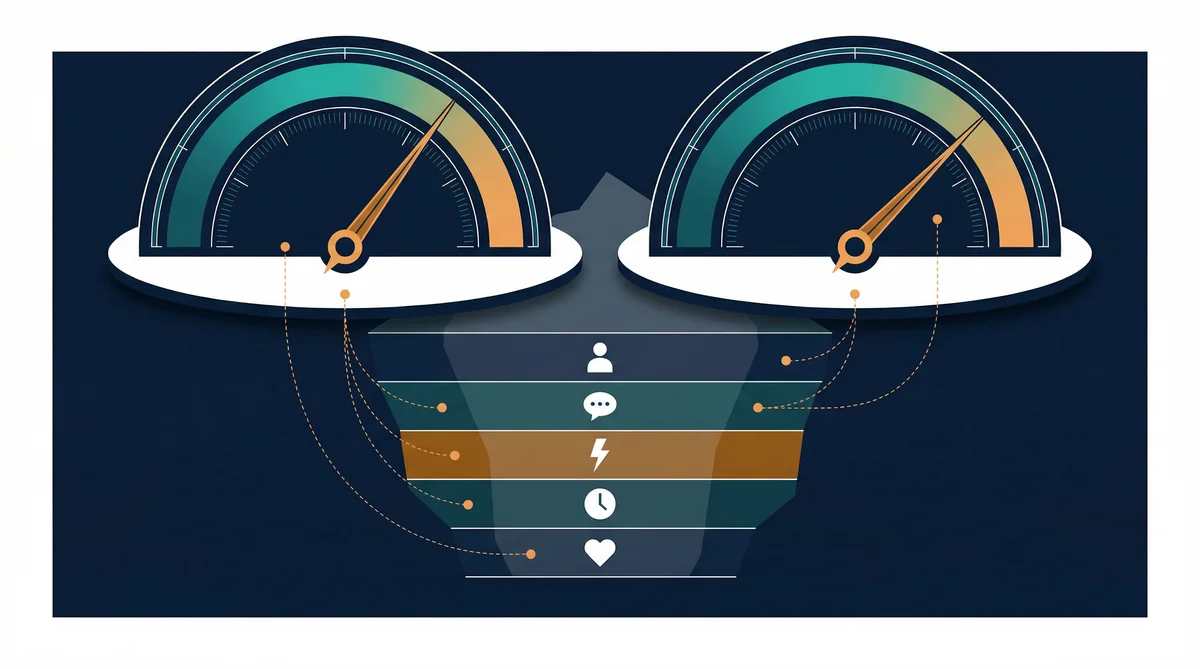
How to move beyond vanity dashboards by combining quantitative metrics with synthetic research that explains what the nu...
Read Article
Using Design Sprints, structured brainstorming, and synthetic research to move from "what's the problem" to "what could ...
Read Article
How to distil weeks of discovery into a ranked set of opportunities, using structured frameworks and synthetic validatio...
Read Article
Using synthetic research to move beyond surface validation into the rich territory where real product insights live...
Read Article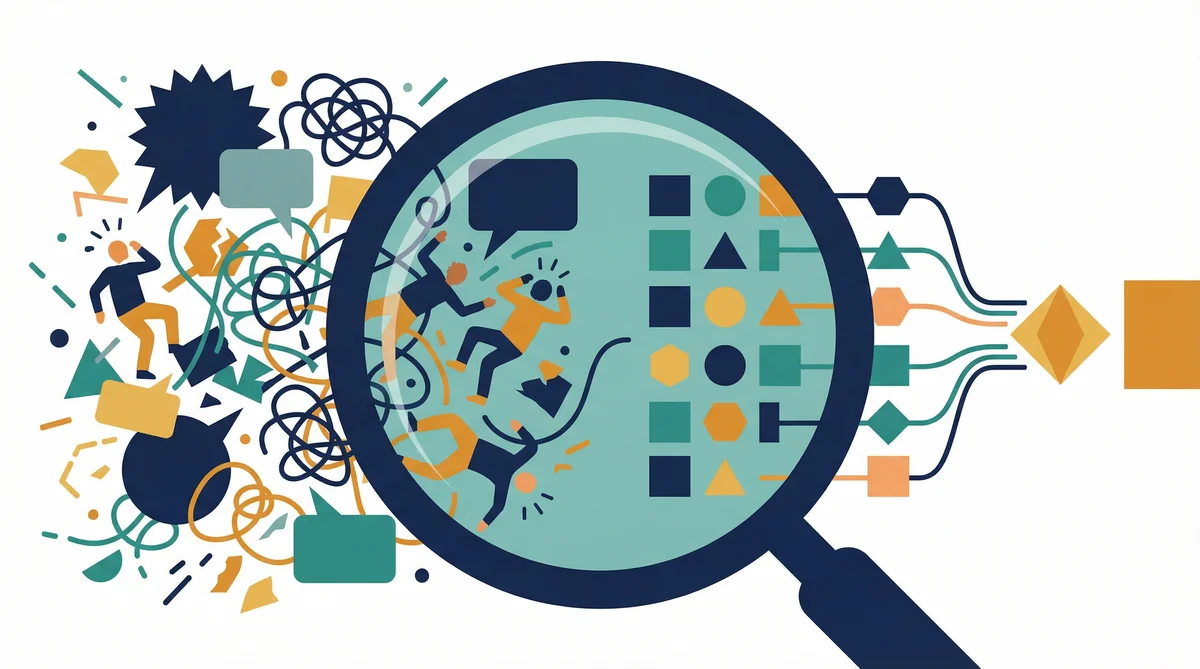
How to define problems worth solving before you build anything, using synthetic research to validate faster than ever...
Read ArticleNine stages: problem framing, discovery research, user segmentation, synthesis and prioritisation, solution ideation, concept testing, validation and de-risking, post-launch measurement, and continuous discovery. Each demands its own research approach.
At the discovery stage, the goal is understanding the problem space deeply: who experiences this problem, how acutely, what existing workarounds they use, and what makes the problem worse or better. The discovery research article in this collection gives a specific FishDog study design with persona criteria and a question set.
Concept testing happens earlier, when the product is still a sketch and you want signal on whether the underlying idea resonates. Validation happens later, with a more complete proposition, and asks whether the product as defined will be bought, used, and recommended. The two articles in this collection cover the distinction and the different study designs.
Post-launch measurement is the discipline of figuring out whether your product is performing as expected after it ships — not just usage metrics, but whether real-world satisfaction matches the pre-launch confidence. Synthetic research lets you run rapid satisfaction and competitive-displacement studies at low cost during the first weeks after launch.